
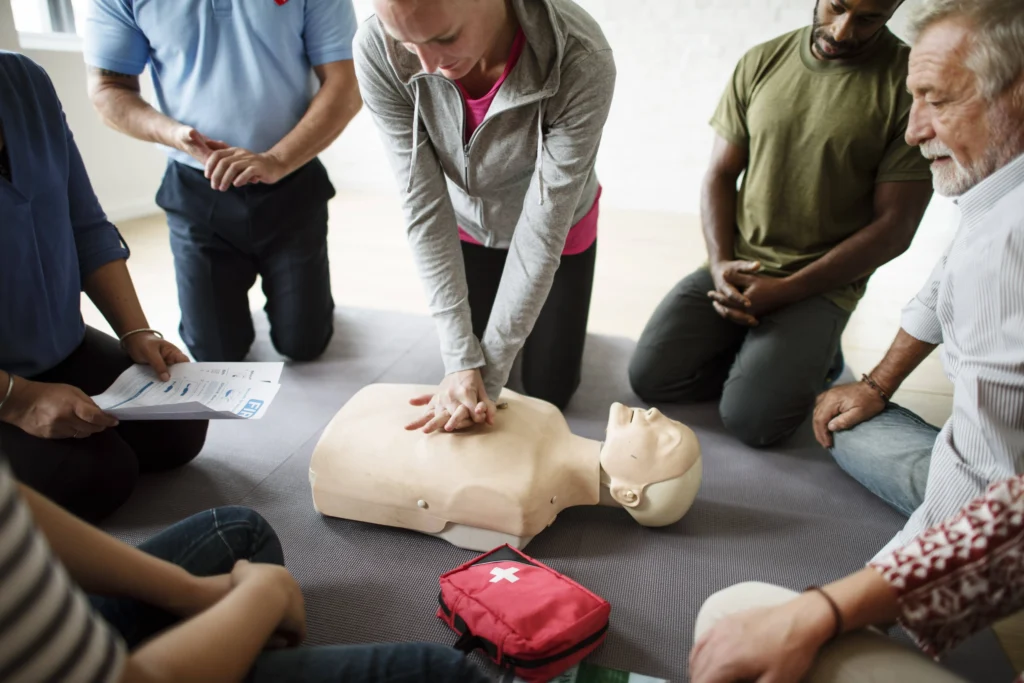
Emergencies can happen at any time. A sudden collapse, heart attack, or accident may require immediate action to save a life. Knowing CPR/AED skills ensures you can respond quickly and effectively, even if you are not a medical professional.
Being prepared is more than a skill—it is confidence. With proper training, you can take charge during a critical moment and give someone the best chance of survival.
Understanding CPR and AED
CPR keeps blood flowing to vital organs when the heart stops. It combines chest compressions and rescue breaths to maintain oxygen circulation. An AED, or automated external defibrillator, delivers a controlled shock to restore the heart’s normal rhythm.
Together, CPR/AED forms a life-saving team. Knowing both skills allows you to handle cardiac emergencies while waiting for professional help to arrive.
Step 1: Recognize an Emergency
Quick recognition is essential. Check if the person is unresponsive or not breathing normally. Look for warning signs such as sudden collapse, chest discomfort, or difficulty breathing.
Once you recognize an emergency:
- Call for help immediately
- Ensure the scene is safe for you and the victim
- Retrieve an AED if one is available
Early recognition saves precious seconds that can change the outcome.
Step 2: Begin CPR
Start chest compressions as soon as possible. Place your hands on the center of the chest and push hard and fast at a steady rhythm. Proper compressions maintain blood flow to the brain and heart.
If trained, provide rescue breaths after every 30 compressions. If not, hands-only CPR is still highly effective. The key is to act quickly and confidently.
Step 3: Using the AED
As soon as an AED is available, turn it on and follow the voice prompts. Place the pads correctly on the victim’s chest, and allow the device to analyze the heart rhythm. Stand clear when the shock is delivered.
Continue CPR after the shock if instructed. This cycle continues until the person shows signs of life or emergency responders arrive. CPR/AED training teaches you to integrate both skills seamlessly for maximum effectiveness.
Step 4: Safety and Scene Awareness
While providing CPR and using an AED, keep safety in mind. Avoid hazards such as wet floors, electrical cords, or traffic if outdoors. Check surroundings for objects that could cause harm to you or the victim.
Safety ensures that you can help effectively without putting yourself at risk. Being prepared includes knowing how to manage the environment during emergencies.
Step 5: Confidence in Action
Confidence is critical during high-pressure situations. Training allows you to practice compressions, breaths, and AED use until it becomes second nature. Being calm helps you perform each step correctly.
Regular review and practice improve:
- Speed of response
- Accuracy of compressions and breaths
- Proper AED use
- Decision-making during complex situations
Confidence enhances the overall effectiveness of your life-saving actions.
Who Can Benefit from CPR/AED Training
Everyone can benefit from learning these skills. Especially helpful groups include:
- Parents and caregivers
- Teachers and school staff
- Coaches and fitness trainers
- Office employees and managers
- Lifeguards and volunteers
Training more people increases the chances of survival for anyone experiencing a cardiac emergency.
Common Mistakes to Avoid
Even trained responders can make errors under stress. Avoid:
- Delaying CPR while waiting for professionals
- Improper hand placement or compression depth
- Stopping compressions too soon
- Hesitating to use an AED
Proper training and practice minimize these mistakes and increase survival rates.
Why Practice Matters
CPR and AED skills are perishable. Without practice, you may forget steps or perform compressions incorrectly. Frequent refreshers or hands-on practice help maintain readiness.
Regular practice allows you to:
- Respond quickly and accurately
- Perform compressions and breaths correctly
- Use the AED confidently
- Stay calm under pressure
Being prepared ensures you are ready to act whenever an emergency occurs.
Conclusion
Mastering CPR/AED skills equips you to respond to sudden emergencies confidently and effectively. Immediate action, proper compressions, and early defibrillation can save lives and reduce complications.
Training through CPRC ertification Now provides the knowledge, hands-on practice, and confidence to handle cardiac emergencies anywhere. Emergencies are unpredictable, but your preparation can make a life-changing difference.