
The post-apocalyptic genre has enthralled gamers for decades, but few franchises have captured hearts and imaginations like the Fallout games. From its humble beginnings as a 1997 isometric RPG inspired by tabletop classics to a multimedia empire complete with a critically acclaimed TV series, Fallout is a masterclass in storytelling and world-building. Its signature “Atompunk” aesthetic combines 1950s optimism with the harsh aftermath of nuclear devastation, offering a world that is at once nostalgic and terrifying.
Whether you’re a newcomer curious about the irradiated wastes or a veteran exploring the lore for hidden secrets, this guide dives deep into the timeline, factions, and most essential titles of the Fallout universe. From the enigmatic Vaults to the morally complex Brotherhood of Steel, this article will help you navigate the complex world of Fallout and understand why it remains a cultural phenomenon.
Understanding the Fallout Games Universe
To truly appreciate Fallout games, one must understand the philosophy behind their creation. At their core, these games explore the consequences of humanity’s hubris and the devastation of nuclear war. Central to the lore is “The Great War,” a nuclear exchange between the United States and China on October 23, 2077, which lasted only two hours but reshaped the world forever.
The post-apocalyptic world that emerges is far from empty; it is teeming with factions, mutated creatures, and survivors vying for dominance. Players navigate this landscape as Vault Dwellers, Couriers, or Sole Survivors, making choices that influence both small communities and entire regions. The allure of Fallout lies in this dynamic interplay between survival, morality, and technology.
The Philosophy of Choice
One hallmark of the Fallout games series is player choice. Decisions in the wasteland are never binary. Supporting one faction may strengthen the community while alienating others, and every dialogue option can carry consequences that ripple through the story. This design encourages exploration, replayability, and personal storytelling in ways few franchises achieve.
The Signature Aesthetic
The “Atompunk” style of Fallout is a defining characteristic. Unlike other post-apocalyptic series that lean into bleak realism, Fallout presents a retro-futuristic vision, complete with shiny robots, ray guns, and kitschy 1950s advertisements juxtaposed against irradiated deserts and ruined cities. This blend of optimism and horror gives the series its unique visual and thematic identity.
Survival in the Wasteland
Life in the wasteland is a delicate balance between resource management, combat, and diplomacy. Players must scavenge for food, weapons, and gear, all while avoiding radiation, hostile creatures, and warring factions. The tension between rebuilding civilization and surviving in a lawless world is central to the gameplay experience across all Fallout games.
The Evolution of Fallout Games
The Fallout games series has evolved through three distinct eras, each leaving a unique mark on the franchise and the RPG genre.
- The Classic Era – Fallout 1 (1997) and Fallout 2 (1998) featured isometric gameplay, intricate role-playing mechanics, and dark humor. Developed by Interplay and Black Isle Studios, these games emphasized player freedom and moral ambiguity.
- The Bethesda Era – Fallout 3 (2008), Fallout 4 (2015), and Fallout 76 (2018) shifted the series to first-person/third-person 3D worlds, emphasizing exploration, combat, and immersive storytelling.
- The Obsidian Contribution – Fallout: New Vegas (2010), developed by Obsidian Entertainment, is celebrated for its writing, branching narratives, and faction-driven gameplay, blending classic RPG mechanics with modern accessibility.
From Tabletop Inspirations to Modern Open Worlds
The original Fallout games drew inspiration from tabletop RPGs, particularly Dungeons & Dragons. Complex stats, turn-based combat, and branching storylines were core to the experience. Bethesda’s iteration modernized the franchise, introducing real-time combat, sprawling 3D worlds, and cinematic storytelling. Despite these differences, the games remain connected through lore, factions, and recurring systems like S.P.E.C.I.A.L.
Obsidian’s Masterstroke
Fallout: New Vegas stands out as a pinnacle of narrative design. Its focus on choice, morally gray outcomes, and a politically charged environment makes it the favorite for hardcore RPG fans. Many consider it the best-written entry, demonstrating that a Fallout game can excel in both open-world exploration and storytelling.
The Online Frontier – Fallout 76
Fallout 76 represented a bold experiment as the franchise’s first multiplayer game. Although its initial launch faced criticism, Bethesda’s continuous updates—such as Wastelanders and Steel Reign—have transformed it into a cooperative, ever-evolving world. Players can explore Appalachia, tackle events, and shape settlements alongside friends, offering a new social dimension to the wasteland experience.
Comprehensive Fallout Games Timeline
Understanding the timeline of Fallout games helps players contextualize the events, factions, and technological shifts across decades.
| Title | Release Year | Developer | Setting | Key Protagonist |
| Fallout | 1997 | Interplay | Southern California | Vault Dweller |
| Fallout 2 | 1998 | Black Isle | Northern California | The Chosen One |
| Fallout 3 | 2008 | Bethesda | Capital Wasteland (D.C.) | Lone Wanderer |
| Fallout: New Vegas | 2010 | Obsidian | Mojave Wasteland | The Courier |
| Fallout 4 | 2015 | Bethesda | The Commonwealth (Boston) | Sole Survivor |
| Fallout 76 | 2018 | Bethesda | Appalachia (W. Virginia) | Vault 76 Resident |
Pre-War Era
The Pre-War era is defined by a divergence from real-world history. In the Fallout universe, technological progress prioritized nuclear energy over microchips. Cars, homes, and even toasters were powered by atomic energy. This led to global resource conflicts, eventually culminating in the catastrophic nuclear exchange of 2077.
Post-War Era
The Post-War era is where players explore the ravaged landscape. Fallout 76 depicts the early stages, only 25 years after the bombs fell, while Fallout 4 occurs over 200 years later. Factions, governments, and societies evolve differently across games, explaining the variable power of groups like the Brotherhood of Steel, the Enclave, and the New California Republic.
Regional Settings and Exploration
Each Fallout game presents a distinct geographical area. From the irradiated streets of Washington D.C. to the desert expanses of New Vegas and the forests of Appalachia, each setting offers unique lore, creatures, and environmental storytelling. Players are encouraged to explore every nook and cranny to uncover secrets, complete quests, and understand the world’s history.
Iconic Factions of the Wasteland
Factions define power and politics in the wasteland. Choosing who to ally with often determines the fate of entire communities.
- Brotherhood of Steel – Guardians of pre-war technology, often extremist in their methods.
- New California Republic (NCR) – Democratic faction attempting to restore order amid bureaucracy.
- Enclave – Shadow government remnants aiming to purge “mutants.”
- Railroad – Advocates for Synth rights.
- Minutemen – Volunteer militia protecting settlers.
Moral Complexity
Each faction presents players with moral dilemmas. Supporting one group may strengthen their control but harm others. Fallout games emphasize consequences, making political decisions as engaging as combat or exploration.
Faction Strategies
Factions also influence gameplay mechanics. For example, joining the Brotherhood grants access to advanced Power Armor and weapons, while the NCR provides political influence and military support. Players must weigh their values against practical benefits.
Legendary Creatures of the Wasteland
Radiation has transformed the wildlife into both horrifying and fascinating forms.
- Deathclaws – Apex predators engineered for combat.
- Super Mutants – Victims of the Forced Evolutionary Virus.
- Ghouls – Radiation-altered humans, ranging from sane to feral.
- Mutated Insects – Radroaches, Cazadores, and Mirelurks create environmental hazards and gameplay variety.
Enemy Behavior and AI
Enemy behavior varies across games, from roaming packs in Fallout 3 to cooperative group attacks in Fallout 4. Understanding creature patterns is key for survival, particularly in hardcore modes.
Survival Tips Against Creatures
Players are encouraged to use strategy and environment. For example, high ground and ranged attacks can mitigate Deathclaw threats, while radiation-resistant gear is essential against irradiated zones.
Best Fallout Games to Play in 2026
Depending on your playstyle, certain Fallout games stand out:
- Fallout: New Vegas – Best for story and choices.
- Fallout 4 – Best for exploration and modern gameplay.
- Fallout 2 – Best for hardcore RPG fans.
- Fallout 76 – Best for social and cooperative gameplay.
Choosing Your First Fallout Game
New players should consider story depth, gameplay mechanics, and personal preferences. Those who enjoy narrative-driven RPGs may prefer New Vegas, while fans of base-building and combat may enjoy Fallout 4. Multiplayer enthusiasts will thrive in Fallout 76.
Expansion Packs and DLC
Many Fallout games feature expansions. Fallout 4’s Far Harbor, New Vegas’ Dead Money, and Fallout 76’s Wastelanders add significant storylines and gameplay variety. DLC often enriches lore and rewards exploration.
Vaults and Hidden Secrets
Vaults are central to Fallout lore. Ostensibly built to protect citizens, they were actually social experiments with cruel designs.
- Vault 11 – Forced annual sacrifice.
- Vault 101 – Permanent isolation.
- Vault 77 – One man and puppets.
Exploring Vaults reveals human psychology as much as mutated horrors, offering both narrative depth and gameplay challenges.
Vault-Tec and Its Role
Vault-Tec, the organization behind the Vaults, embodies the series’ dark humor and critique of human experimentation. Its mascot, Vault Boy, is iconic, serving both instructional and ironic purposes in-game.
FAQs
Q1: Do I need to play the Fallout games in order?
No. Each game tells a self-contained story with unique protagonists. Lore overlaps, but newcomers can start with Fallout 4 or New Vegas without confusion.
Q2: Is Fallout 76 playable solo?
Yes. Most quests can be completed alone, though cooperative play enhances the experience.
Q3: What is the S.P.E.C.I.A.L. system?
It stands for Strength, Perception, Endurance, Charisma, Intelligence, Agility, and Luck, defining characters’ abilities and gameplay options.
Can I play Fallout on modern consoles?
Yes. Fallout 4 and Fallout 76 have next-gen updates for PS5 and Xbox Series X. Older titles run through backward compatibility.
Q5: What is a Pip-Boy?
A wrist-mounted computer used to track inventory, quests, maps, and health.
Q6: Who is Vault Boy?
The cheerful mascot of Vault-Tec, illustrating stats and perks.
Q7: Is Fallout 5 coming soon?
Bethesda has confirmed Fallout 5 is in development, but no release date as of 2026.
Conclusion
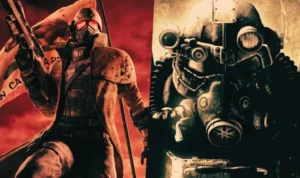
The Fallout games series is more than entertainment—it’s a meditation on humanity, technology, and survival. From classic isometric RPGs to sprawling open worlds, the franchise offers something for every type of gamer. As you step into the wasteland, remember: your choices shape civilization, and the iconic mantra “War.”War never changes” is still relevant today.
Whether you become a hero, a villain, or something in between, the world of Fallout welcomes you. Strap on your Power Armor, grab your Pip-Boy, and prepare for an unforgettable journey through the irradiated lands.